

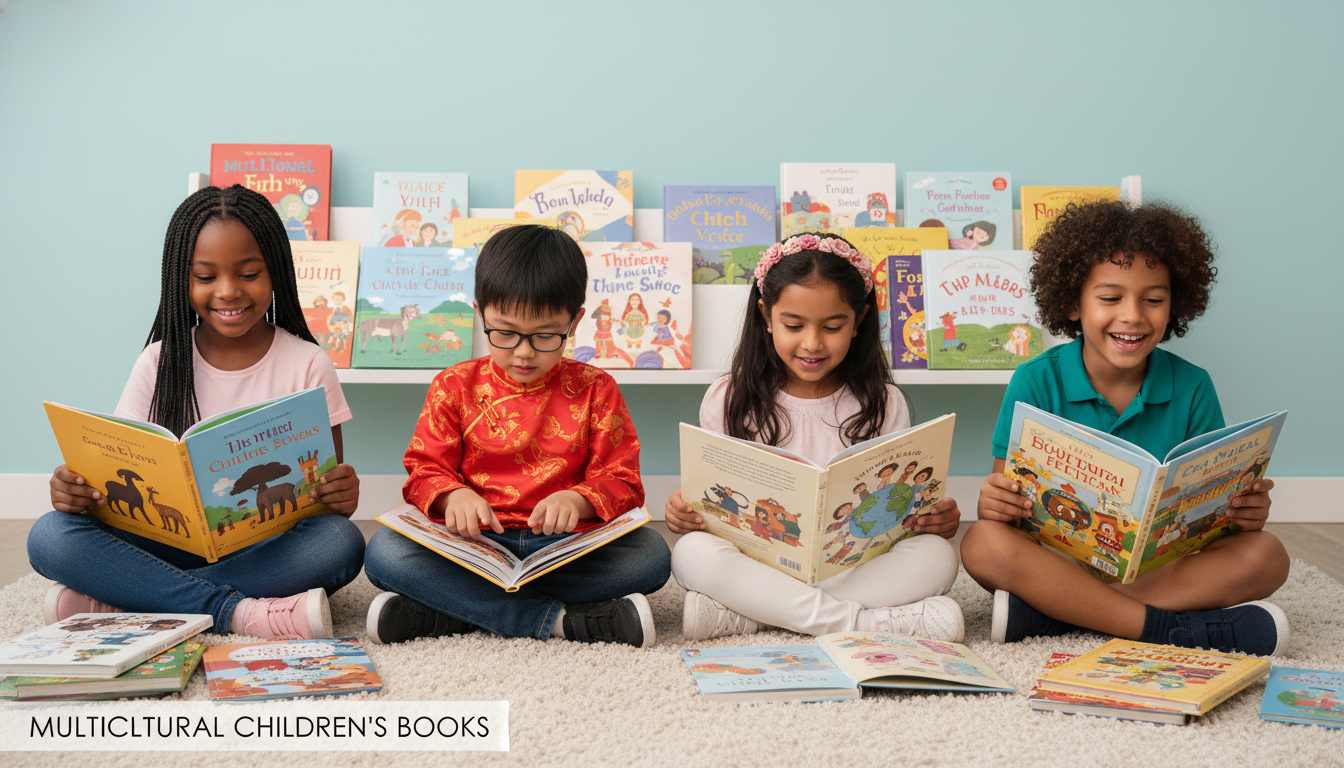
In an increasingly interconnected world, the bookshelf is one of the most powerful tools we have for raising compassionate, aware, and confident children. Literature has always served two primary functions for young readers: it acts as a mirror, reflecting their own experiences, and as a window, offering a view into lives different from their own. This concept, originally coined by Rudine Sims Bishop, is the cornerstone of why multicultural children’s books are not just a niche category, but an essential component of every home and classroom library.
Multicultural children’s books engage readers with stories about characters from various racial, ethnic, religious, and cultural backgrounds. They move beyond tokenism to provide authentic, nuanced representations of diverse lives. Whether you are a parent, a teacher, or a librarian, understanding the impact of these books and knowing how to select high-quality titles is crucial for literacy development and social-emotional learning.
Why Multicultural Children’s Books Matter
The benefits of diverse literature extend far beyond simple exposure to different holidays or foods. Integrating multicultural children’s books into a child’s daily reading routine has profound psychological and educational impacts.
Building Empathy and Understanding
Empathy is a learned behavior, and books are one of the safest simulators for social interaction. When a child reads a story from the perspective of a character who lives in a different country, speaks a different language, or celebrates different traditions, they are practicing perspective-taking. This cognitive exercise breaks down the fear of the unknown. Instead of viewing differences as strange or intimidating, children who read diverse stories learn to view them as interesting and valid. This lays the groundwork for a more inclusive society where prejudice is countered by understanding.
Representation: The Importance of Seeing Yourself
For children from marginalized or minority backgrounds, seeing characters who look like them, talk like them, and live like them is validating. It sends a powerful message: Your story matters. You are the hero of the narrative. This concept, often referred to as self-affirmation, is linked to higher self-esteem and increased interest in reading. When children cannot find themselves in the books they read, they may internalize a sense of invisibility or inferiority. Multicultural children’s books ensure that all children feel seen and valued within the literary canon.
Preparing for a Globalized World
We live in a global economy and a global community. Cultural competence—the ability to interact effectively with people from different cultures—is a skill set that will be mandatory for the future workforce. Exposure to multicultural literature at a young age normalizes diversity. It prepares children to navigate complex social environments with respect and curiosity rather than bias.
How to Choose High-Quality Diverse Books
Not all books featuring diverse characters are created equal. As the demand for multicultural children’s books has grown, so has the quantity of titles, but quality varies. When curating your library, it is important to look past the cover and evaluate the content critically.
Check for Authenticity
Authenticity is key. Who wrote the book? Is the author writing from their own cultural experience, or are they an outsider looking in? While authors can certainly write outside their own background with research and sensitivity, books written by authors representing the culture they are writing about (often called OwnVoices) tend to possess a level of nuance and emotional truth that is hard to replicate. Look for bio notes on the jacket flap to learn about the author’s connection to the subject matter.
Avoid Stereotypes and Tokenism
Be wary of books that rely on tired tropes or generalizations. Does the book depict a specific culture only in the context of a historical struggle or a specific holiday? While these stories are important, they should not be the only representation a child sees. Look for stories that show diverse characters in everyday situations—playing, solving problems, dreaming, and loving. Tokenism occurs when a diverse character is included in the background merely to check a box, without having a voice or agency in the story. High-quality multicultural books center the diverse experience meaningfully.
Assess the Illustrations
In picture books, art is just as important as text. Do the illustrations depict a range of skin tones, hair textures, and facial features accurately and respectfully? Or are the characters drawn with generic features and simply colored in differently? Authentic illustrations enrich the story and provide visual cues that celebrate physical diversity.
Categories of Multicultural Books to Explore
To build a well-rounded library, aim for variety. Diversity touches every genre, from board books for toddlers to young adult novels.
Contemporary Realistic Fiction
These stories are vital because they normalize diversity in modern contexts. They might be about a child navigating the first day of school, dealing with a sibling, or learning to ride a bike. The cultural background provides texture to the story—perhaps the characters eat kimchi for dinner or call their grandmother Abuela—but the central themes are universal childhood experiences. This helps children realize that despite cultural differences, we share many of the same emotions and challenges.
Folklore and Mythology
Every culture has its origin stories, trickster tales, and legends. Reading folklore from Africa, Asia, the Americas, and Oceania introduces children to different narrative structures and worldviews. It teaches them that the Brothers Grimm and Aesop are just one tiny slice of the world’s storytelling heritage.
Biographies and Non-Fiction
History textbooks often leave out significant contributions from people of color, women, and indigenous populations. Multicultural biographies fill these gaps. Reading about scientists, artists, activists, and leaders from diverse backgrounds inspires children and provides them with a broader array of role models. Non-fiction books about festivals, geography, and daily life in other countries also satisfy a child’s natural curiosity about the world.
Incorporating Diversity into Your Routine
Buying the books is only the first step. To truly champion multicultural children’s books, adults must actively integrate them into reading routines.
- Audit Your Shelves: Take a look at your current collection. What percentage of the books feature human characters from diverse backgrounds? If the number is low, make a conscious effort to balance it out during your next library visit or bookstore trip.
- Discuss the Differences: Don’t be
