

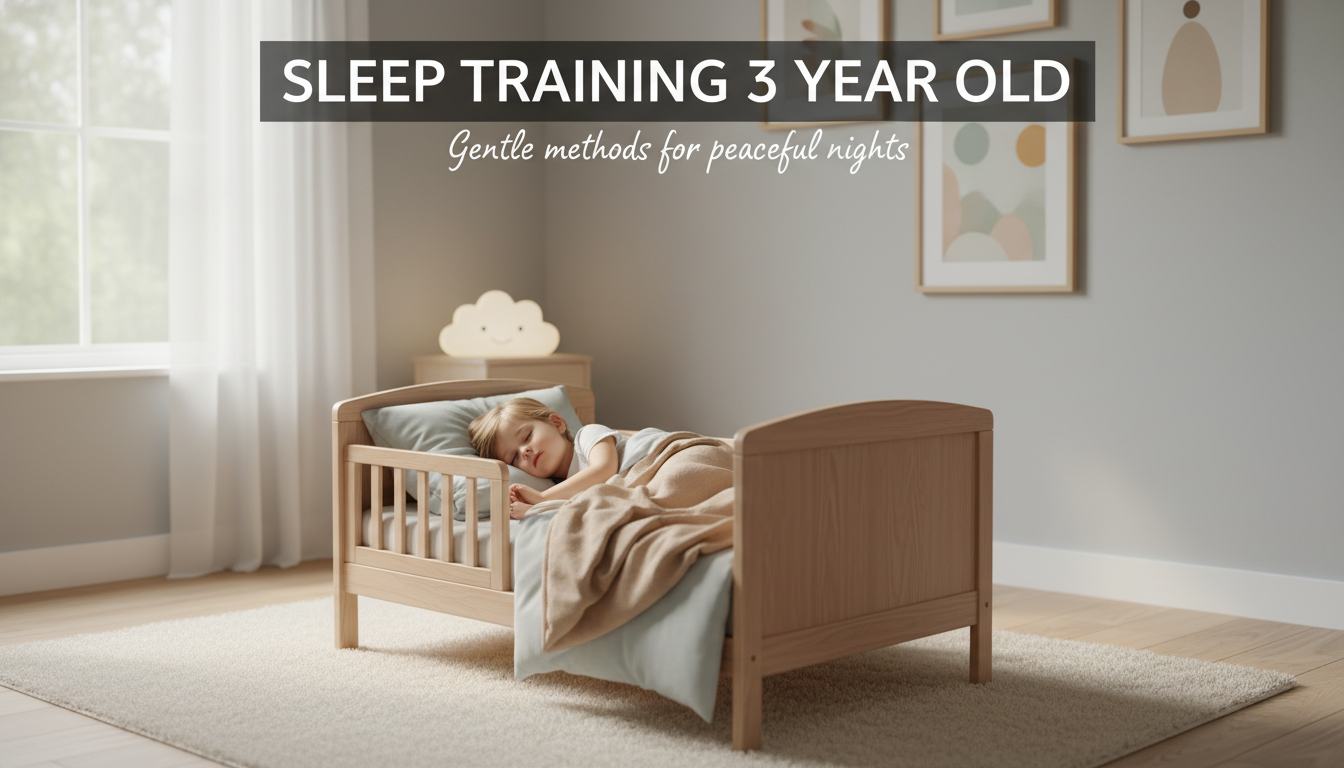
If you are reading this, you are likely exhausted. You might have thought you were done with sleepless nights after the baby phase, but now you are facing a new, perhaps more challenging opponent: the 3-year-old. Sleep training a 3 year old is a unique challenge that differs significantly from training an infant. At this age, your child has a vivid imagination, a strong will, the physical ability to leave their room, and the verbal skills to negotiate like a lawyer.
Rest assured, it is not too late to establish healthy sleep habits. Whether you are dealing with a sleep regression, transitioning from a crib to a bed, or trying to break co-sleeping habits, this guide covers the psychology behind toddler sleep and actionable methods to regain your evenings.
Why is Sleep Training a 3 Year Old So Hard?
Before diving into the solution, it helps to understand the problem. Three is a pivotal age for development. Your child is experiencing a massive surge in independence and cognitive ability. This developmental leap manifests in several ways that disrupt sleep:
- Boundary Testing: Your toddler wants to see what happens when they say no or get out of bed.
- FOMO (Fear of Missing Out): They know you are still awake and having fun without them.
- Imagination and Fears: Shadows become monsters, and the dark becomes scary.
- Control: Sleep is one of the few things a child can control. They cannot be forced to sleep, and they know it.
Sleep training at this age is less about cry-it-out and more about clear communication, consistent boundaries, and behavioral psychology.
Setting the Stage: The Pre-Requisites
You cannot successfully sleep train a toddler without a solid foundation. Before trying a specific method, ensure these three elements are in place.
1. The Bedtime Routine
Routine is comforting. At 3 years old, a child needs a predictable sequence of events to signal that the day is ending. This should last 20 to 30 minutes. A solid routine might look like this:
- Bath and brush teeth.
- Put on pajamas.
- Read two books (limit it to two to prevent stalling).
- One song or cuddle.
- Lights out.
Visual schedules with pictures can be incredibly helpful at this age. Let the child check off each step so they feel involved.
2. The Environment
Is the room conducive to sleep? It should be cool, dark, and quiet. However, because 3-year-olds can develop fears of the dark, a nightlight is acceptable. Opt for a red or amber light rather than blue or white, as these warmer colors interfere less with melatonin production.
3. The ‘Ok-to-Wake’ Clock
One of the best investments for sleep training a 3 year old is a color-changing clock. Toddlers have no concept of time. If they wake up at 4:00 AM, they think it is morning. Teach them that when the light is red, they stay in bed. When it turns green, they can come out. This removes the power struggle; you are not the one saying no, the clock is.
Method 1: The Bedtime Pass
This is often the most effective method for 3-year-olds who constantly call out for water, hugs, or one more story. It works because it gives the child a sense of control.
How it works:
- Create a physical card or token. Decorate it with your child.
- Explain that this is their Bedtime Pass. They can use it one time per night for a specific request (a hug, a sip of water, a trip to the potty).
- Once they use the pass, you take it away until the next night.
- If they call out after the pass is gone, you gently remind them they have used their pass and it is time for sleep.
Why it works: It validates their needs but puts a hard limit on them. Most children hold onto the pass just in case they need it, and often fall asleep without using it at all.
Method 2: The Silent Return (The Walk Back)
If your main issue is a child who constantly gets out of bed and wanders into the living room or your bedroom, the Silent Return is the standard approach.
How it works:
- The first time they get up, walk them back to bed. Tuck them in, say, I love you, it is bedtime, and leave.
- The second time they get up, walk them back to bed. Say only, Bedtime.
- The third time (and every time after), guide them back to bed completely silently. No eye contact, no talking, no scolding, no tucking in.
This method requires immense patience. On the first night, you might walk them back 50 times. On the second night, perhaps 20. By the third or fourth night, they usually realize that getting up yields no reaction and is boring, so they stay in bed.
Method 3: The Chair Method (Fading)
If your 3-year-old is anxious or used to you laying with them until they fall asleep, going cold turkey might be too traumatic. The Chair Method is a gradual approach.
How it works:
- Sit in a chair next to their bed until they fall asleep. Do not interact, play on your phone, or engage in conversation. You are a boring, comforting presence.
- Every few nights, move the chair further away. First to the middle of the room, then to the doorway, then into the hallway.
- Eventually, you will be out of the room entirely.
This takes longer (usually two weeks) but involves fewer tears and battles than other methods.
Handling Night Wakings and Nightmares
Even after your toddler falls asleep, they may wake up in the middle of the night. How you respond determines if the sleep training sticks.
If it is a behavioral waking (they want to play or come into your bed), remain neutral and firm. Use the Silent Return method. If you allow them into your bed occasionally, you are intermittently reinforcing the behavior, which encourages them to keep trying.
If it is a nightmare or night terror, offer comfort immediately. Validate their fear, check the closet if they ask, and reassure them they are safe. Once they are calm, encourage them to stay in their own bed to finish the night.
Dealing with Nap Transitions
Sometimes, a 3-year-old fights bedtime simply because they are not tired. Many children drop their afternoon nap around age 3. If your child naps for two hours and then refuses to sleep until 10:00 PM, it might be time to cut the nap.
Replace the nap with Quiet Time. This is 45 to 60 minutes where they must stay in their room with low-stimulation toys (books, puzzles, coloring). This preserves your break during the day and ensures they are tired enough for bedtime.
Consistency is the Key
Sleep training a 3 year old is a battle of wills. Your toddler is betting that if they scream loud enough, ask for water enough times, or cry hard enough, you will give in. If you give in after 45 minutes of protesting, you have inadvertently taught them that the price of getting what they want is 45 minutes of screaming.
Choose a method that aligns with your parenting style and stick to it for at least two weeks. It will get harder before it gets better—this is known as the extinction burst—but consistency is the only way to secure long-term sleep success for both you and your child.
Final Thoughts
Reclaiming your nights is not selfish; it is necessary for your well-being and your child’s development. A well-rested parent is a more patient parent, and a well-rested toddler is happier and healthier. Stay calm, stay boring, and stay consistent. You can do this.
